Cart
0

It is sometimes difficult to truly convey the amazing versatility of glass, particularly when it is characterised as being far more fragile than it actually is.
Much like water, which can flow or crash, glass can be delicate, fragile and elegant in its design, or it can be exceptionally strong, able to carry significant amounts of weight without straining even slightly.
The strength of walk-on glass can be uncanny, used not only to add additional light to a home or office environment, but also to create a unique aquarium surround, a panoramic view of a glorious vista or even a bridge across a verdant canyon to an area of outstanding natural beauty.
How Strong Is Walk-On Glass?
Determining the strength of walk-on glass can be difficult, as its strength comes not only from the pane itself, but also from how it is installed and the support surrounding it. However, the minimum weight dictated by the standard BS EN 1991-1-1:2025 is clear:
- Glass panes must support a minimum uniformly distributed load of 1.5kN/m2 (kilonewtons per square metre)(roughly 338lbs).
- Glass panes must also support a minimum concentrated load of 2kN/m2 (450lbs).
This minimum provides a significant level of tolerance, but in reality, the strength of walk-on glass is often far stronger in order to ensure it is not put under strain for any length of time.
How Do We Make Walk-On Glass?
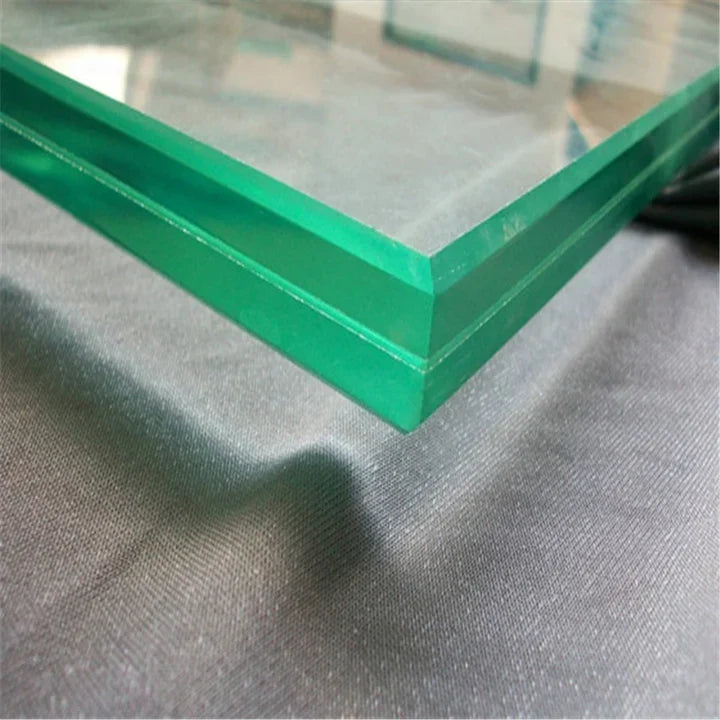
Walk-on glass is typically toughened tempered glass, which is compressed to create tension that makes it far stronger as the compressive forces press against each other. This is the same principle behind the strength of Prince Rupert’s drops.
There are two main methods to create that compressive force:
- The traditional method is to produce glass, even it out and then superheat the glass again before rapidly cooling it rather than letting it cool naturally as with conventional glass.
- Alternatively, there is a chemical method, where a pane of glass is soaked in heated potassium salt, which works in a similar way.
The result is often laminated to provide extra strength and structural rigidity.