Cart
0
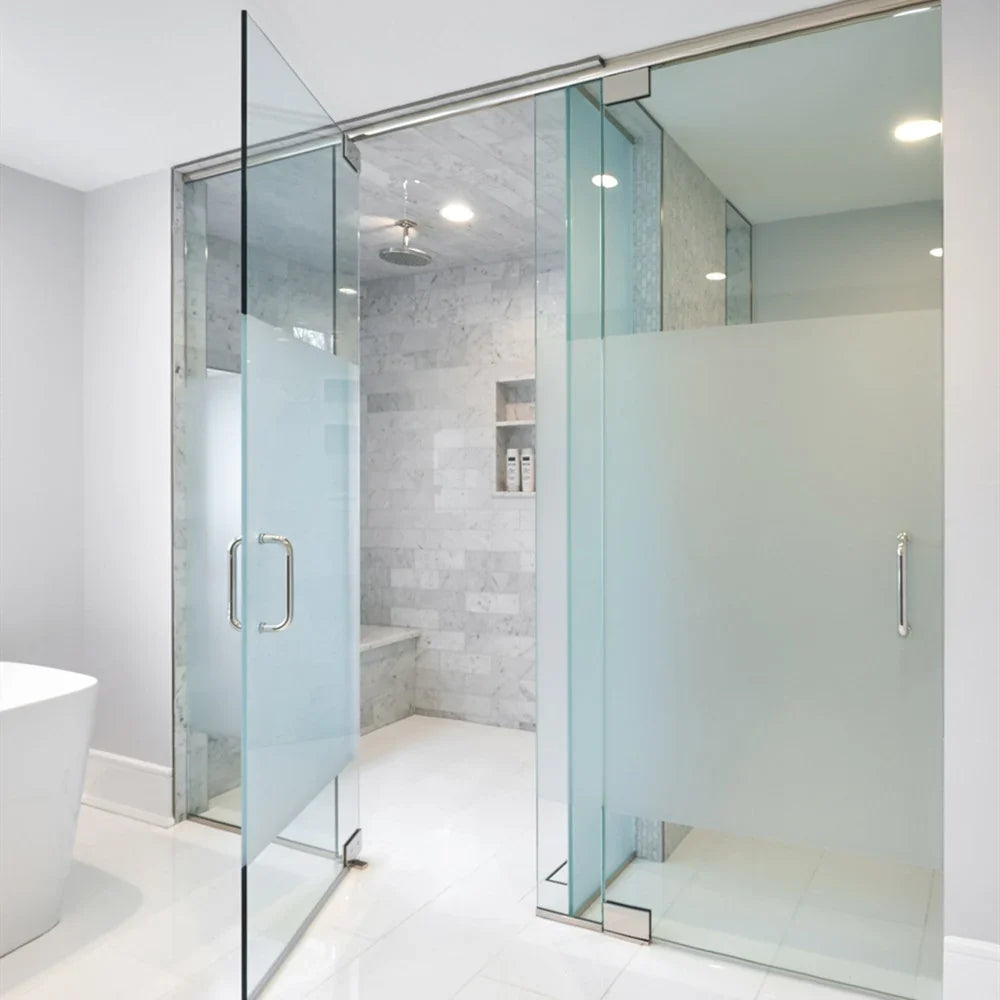
The recent development of a frosted glass layer known as a polymer-based microphotonic multifunctional metamaterial (PMMM) has the potential to provide the privacy benefits of treated glass but without losing the natural light benefits and also ensuring a cooler office.
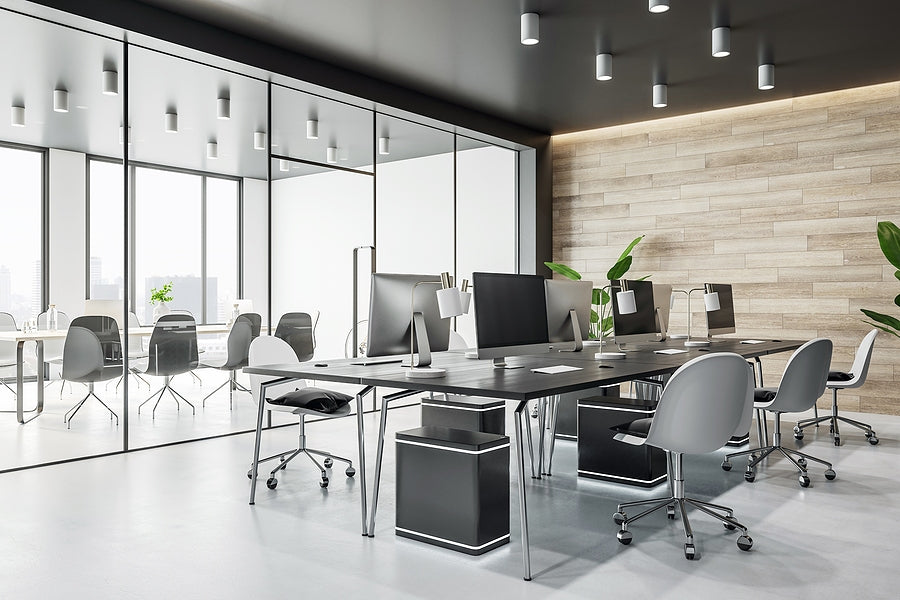
Designing an office around glass partitions, staircases, balustrades and other structural glass installations can be difficult, and currently requires an architect to take into account the level of natural light that is entering the building.
Done right, it enables creative daylighting opportunities which allow for natural light and heat to minimise additional unnecessary energy costs, but done wrong and it can cause glare, discomfort and frustration for employees.
Could a promising new technology from a German technical institute be the ideal way to split the difference and provide additional light without compromising privacy or comfort?
What Is PMMM Glass?
The solution, according to the Karlsruhe Institute of Technology (KIT), is an ultra-thin polymer-based material that has multiple properties and can be applied to existing glass products.
The layer consists of a surface of microscopic silicone pyramids that perform various functions when interacting with sunlight:
Light Diffusion
Their main function is to diffuse light, providing the same level of privacy and glare reduction as conventional frosted glass, causing anything behind the glass to appear blurry.
According to the study, 73 per cent of the light is diffused by the micro-pyramid structure, allowing for significant obscuring without completely blocking out light.
Brighter Light Transmission
According to KIT, the layer is so effective at transmitting light that it allows rooms to be brighter than conventional windows, but without the privacy or greenhouse effect downsides that come with conventional windows.
The PNMM layer has a light transparency rate of 95 per cent compared to the 91 per cent of a typical window. By comparison, frosted glass tends to have between 50 and 80 per cent transparency rating.
Interestingly, KIT has posited that this increased transparency means that it could see potential use in greenhouses, as it allows more light in than conventional glass and could thus contribute to better yields, although more research will need to be undertaken on this aspect.
Passive Cooling
Unlike other forms of glass structure, which typically increase the temperature of the room, the PMMM layer could cool ambient temperatures in the room by as much as six degrees Celsius, which is a significant benefit when attempting to work during a heatwave.
If these figures can be proven in practice, this could make a hot office feel significantly less warm without the major costs involved with turning on air conditioning systems.
Self-Cleaning
An additional side benefit is that the contact angles of the micro-pyramids create a hydrophobic surface, causing moisture to effortlessly move around in beads across the PNMM layer, absorbing dirt and dust in the process and providing a remarkably powerful self-cleaning effect.
The effect, known as superhydrophobicity or the lotus effect, causes water to bead up rather than be absorbed by the glass, significantly reducing the maintenance and cleaning costs of the windows.