Cart
0
There are many ways in which to add more light and air into a property, of which adding a Juliette balcony is just one. These are particularly popular additions on flats or apartments above street level. But what are they?
What is a Juliette balcony?
Juliette balconies, which are also known as French balconies and sometimes balconettes, are shallow balconies that stick out from the side of a property.
What defines a Juliette balcony is its depth. They are typically very narrow, often little more than a ledge. This means they are easy to add to existing buildings, because they do not extrude far from the facade.
However, if you are seeking a way of adding some outside space to your apartment, they are not likely to be the right option.
How big are Juliette balconies?
Juliette balconies can vary in both width and depth. In terms of width, they can be as wide as an existing window, or they can span the width of a whole building.
In most properties, however, Juliette balconies are smaller, usually as wide as a set of double doors.
What sets Juliette balconies apart from standard balconies is their depth. They can be as narrow as six inches and are never more than two feet deep. This is because their primary purpose is not to provide outdoor space but to increase the natural like that enters a room.
Because Juliette balconies do not provide any external access in a property, they are considered to be a permitted development under planning regulations in England.
What features do Juliette balconies have?
Juliette balconies are commonly located in front of a set of French doors, allowing them to be fully opened when the weather allows and ensuring that light can stream into the property at any time of year.
One of the key features, beyond the doors leading out to them and the ledge itself, is a guard rail or protective barrier of some description.
These not only make the Juliette balcony look beautiful from the outside of the building, but also serve as an important safety feature.
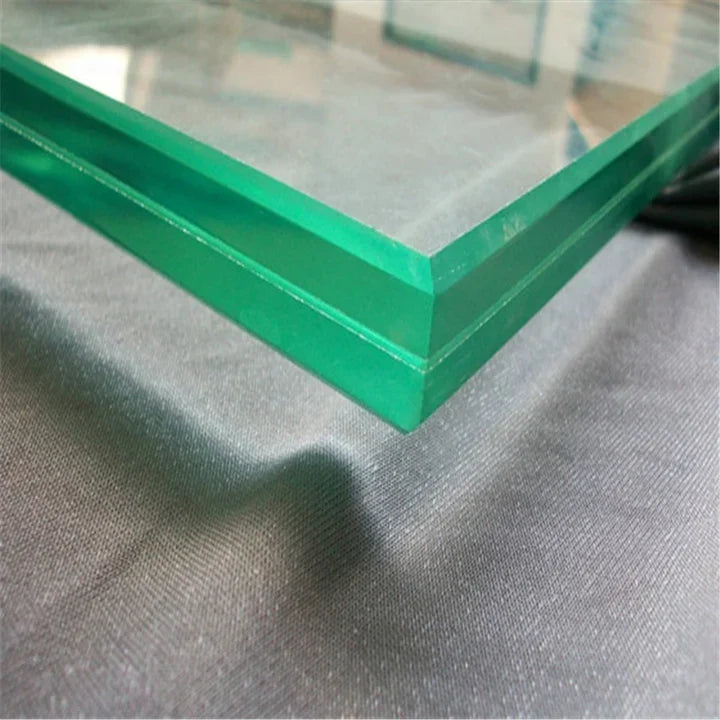
For those who want a Juliette balcony that maximises the natural light in a room, toughened laminated glass is often the best choice to provide that barrier.
We typically recommend that you choose either 17.5mm or 21.5mm toughened laminated glass for a Juliette balcony because this type of glass is not only sleek and stylish, but also highly durable and strong.
Where does the term “Juliette balcony” come from?
The popular term “Juliette balcony” was adopted after William Shakespeare’s play Romeo and Juliet rose in prominence.
It is, of course, a reference to the famous scene in which Romeo and Juliet confess their love for one another. Interestingly, the original script has Juliet appear at a window, while the balcony was added to sets in later productions.
Nevertheless, it has become a symbol associated with young love – and you can even visit Juliet’s balcony in Verona at the property upon which the Capulet’s home is reportedly based.
However, Juliette balconies were popular fixtures on European buildings for centuries, with the trend arriving in the UK in the 19th century during the Regency era, when balconies were a popular feature but not all properties had the space for them.