Cart
0
The value of toughened glass is that it can withstand many different pressures. While it may be hard to break on the one hand and also useful for providing glass walkways that can withstand the weight of anyone stepping on them, the capacity to resist water is another important consideration.
Evidence of this can be seen in places like the Lake District. The national park contains England’s wettest inhabited place (Seathwaite), but the area as a whole has high rainfall due to its westerly position near the sea and high mountains. That is fine for filling up the lakes, but in severe weather, river and lake levels can get perilously high.
This has been the case over the first few days of November, with rivers like the Greta in Keswick and the Derwent and Cocker in Cockermouth threatening to burst their banks.
Why Does Keswick Use Glass Flood Defences?
However, anyone visiting these towns will note some significant developments in their flood defences in recent years. In Keswick, part of the riverside defence is formed by toughened glass balustrades atop the retaining wall that can contain higher, fast-flowing water.
The great benefit of these is that the rest of the time, unlike a high wall or dyke, they offer the chance for locals and visitors alike to still see and admire the river, as well as the scenery beyond.
Of course, that is not all there is to the town’s flood defences, and there are other issues to consider, such as concerns over the build-up of gravel banks that constrict the flow of the River Greta. Nonetheless, the glass-topped wall shows the utility of toughened glass in a flood situation.
How Did Glass Protect A Café In Coniston?
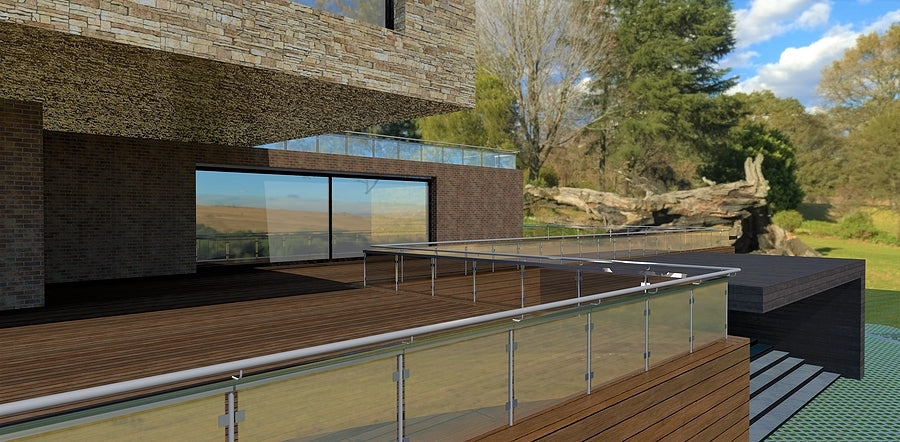
Another place in the Lake District where toughened glass may be very useful is by Coniston Water. Glass balustrades are much in evidence at the Bluebird Cafe on the lake shore, which has recently been reopened after refurbishment.
What has also been in evidence is water splashing across the balustrades and lapping up against the windows of the venue as the waters have been swollen by heavy rain, with the café posting footage of this on its Facebook page.
Thanks to this protective glass, the café owners were able to confirm that the café stayed dry and it is believed that the worst is past.
The flooding seen on this occasion was mild compared to some events in recent years, the most notorious being Storm Desmond a decade ago, with the Honister Pass, which lies close to Seathwaite and a few miles south of Keswick, recording the highest 24-hour rainfall total on record for the UK. This produced particularly severe floods and severe damage.
With climate change making such storms increasingly likely, locations such as Keswick’s riverside streets and the shorelines of the lakes themselves may be increasingly under threat from extreme weather.
That may mean that in the years ahead, more toughened glass is used in the area’s waterside locations, with the advantage that it fits well with the common architectural style of modern buildings across the national park, where glass balustrades commonly combine with wood and local stone.